The most frustrating sentence in trading is: “I knew what to do — and did the opposite.” You had the plan. The stop was written. The size was decided. And in the moment, you moved the stop, doubled the size, took the un-planned trade. This gap between knowing and doing is where most trading careers actually end — and it is precisely the gap discipline is designed to close.
Discipline is not gritting your teeth harder. It is the consistent execution of a pre-committed plan under emotional pressure — and consistency comes from structure, not from character. The disciplined trader is not the one who feels no temptation; it is the one whose system makes acting on temptation difficult and acting on the plan easy. That distinction changes everything about how you build it.
At Elearn ProMax we put it simply: your trading system tells you what to do; your psychology decides whether you actually do it. Discipline is the bridge.
- Rules made calm, tested under fire. Your plan was written by your rational mind on Sunday evening. It is executed by your stressed mind on Tuesday at 9:20 with money moving. Under threat physiology, the brain discounts future consequences and grabs immediate relief — and breaking a rule is always immediately relieving.
- The exception story. Rules are rarely broken defiantly; they are broken through a story: “this situation is different,” “just this once,” “I can feel it.” Every broken rule in your journal has one of these stories attached.
- Unclear rules. “Trade carefully” cannot be followed or broken — it is a mood, not a rule. Discipline requires rules a stranger could verify: maximum 3 trades; stop placed with the order; no entry after 2:30pm.
- Randomly rewarded violations. Sometimes breaking the rule pays. That intermittent reward trains rule-breaking more powerfully than consistent punishment would — the same schedule that makes gambling compulsive. One profitable violation can undo months of discipline unless the review process names it a failure.
- P&L-based self-worth. If a green day means you are good and a red day means you are bad, you will inevitably bend rules to force green days. Discipline requires moving identity from outcomes to process.
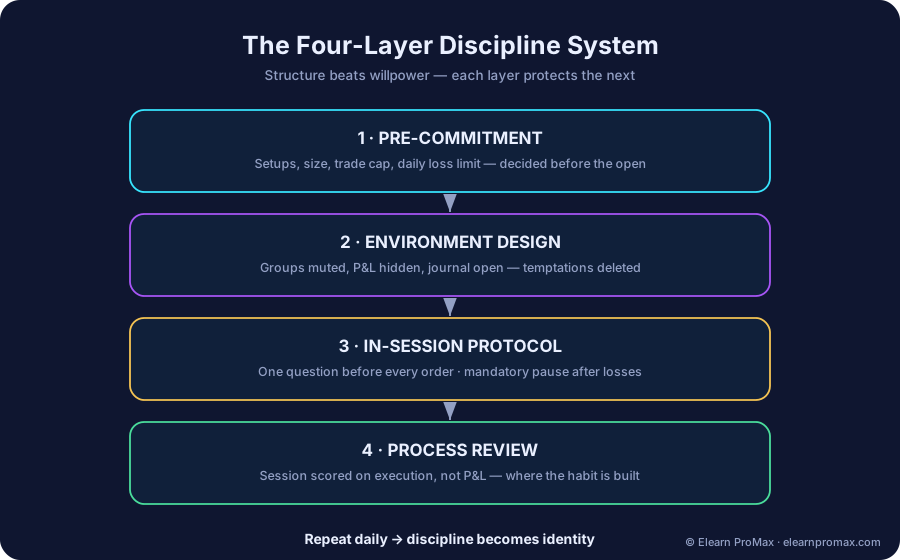
Pre-commitment. Every decision that can be made before the session, must be: setups allowed today, size per setup, maximum trades, hard daily loss limit, session end time. During market hours you are not a decision-maker; you are an executor of decisions already made. Where your broker offers limits and caps, set them — structure beats intention.
Environment design. Remove the temptations you keep “resisting”: mute tip groups during market hours, hide the P&L column while positions run, keep the journal open beside the terminal. Every temptation you delete is willpower you no longer need.
In-session protocol. One breath and one question before every order: “Is this on today’s list?” After any loss, a mandatory pause (see the cooling-off rule). After two consecutive rule-breaks — not losses, rule-breaks — the session ends.
Process review. End each session by scoring execution, not outcome (scorecard below). This is where discipline is actually built: the review is the repetition that rewires the habit. Skipping review on winning days is how profitable violations get silently rewarded.
Score each item 0 or 1 at the end of every session. The day’s grade is the total — P&L is deliberately not on the card:
- I wrote my plan (setups, size, max trades, loss limit) before the open.
- Every trade I took was on that written list.
- Every stop-loss was placed with the order and never widened.
- I respected my daily loss limit and trade cap.
- I paused after losses instead of immediately re-entering.
- I journalled the session, including the emotions, before closing the terminal.
6/6: a professional session, whatever the P&L. 4–5: identify tomorrow’s single fix. ≤3: reduce size until the score recovers — size follows discipline, never the reverse.
Track the weekly average. Traders are routinely astonished to find their P&L curve follows their discipline score with a lag of a few weeks — process leads, outcomes follow. (Follow, not guaranteed: discipline cannot rescue a strategy with no edge; it reveals whether your strategy has one.)
India’s market structure tests discipline in specific, predictable places: the 9:15 opening volatility that punishes unplanned early entries; expiry-day premium moves engineered to trigger FOMO; the afternoon boredom window where overtrading breeds; and a tip-and-screenshot culture on Telegram and WhatsApp that constantly invites you off your plan. A disciplined Indian intraday plan therefore names these windows explicitly — e.g. no entries in the first 15 minutes; expiry-day size is half of normal; groups muted from 9:00 to 3:30. SEBI’s research (below) is the backdrop: the overwhelming majority of individual F&O traders lose money, and undisciplined execution — not missing information — is the most correctable part of that pattern.
Mature discipline stops feeling like restraint. The end state — what Elearn ProMax trains as trader identity and success-virtue building — is the stage where following the plan is simply who you are, the way a surgeon does not debate whether to scrub in. You reach it through repetition: every reviewed session is one repetition of being a process trader. The daily structure that holds all of this together is covered in the professional trading routine, and you can measure where your discipline stands today with the free Trader’s Mind Scorecard.